Barcelona's Underground Film Collective Is Rewriting How the City Talks About Cinema
A grassroots movement centred in Gràcia is challenging mainstream venues and forcing cultural institutions to reckon with who gets to tell stories in this city.
A grassroots movement centred in Gràcia is challenging mainstream venues and forcing cultural institutions to reckon with who gets to tell stories in this city.
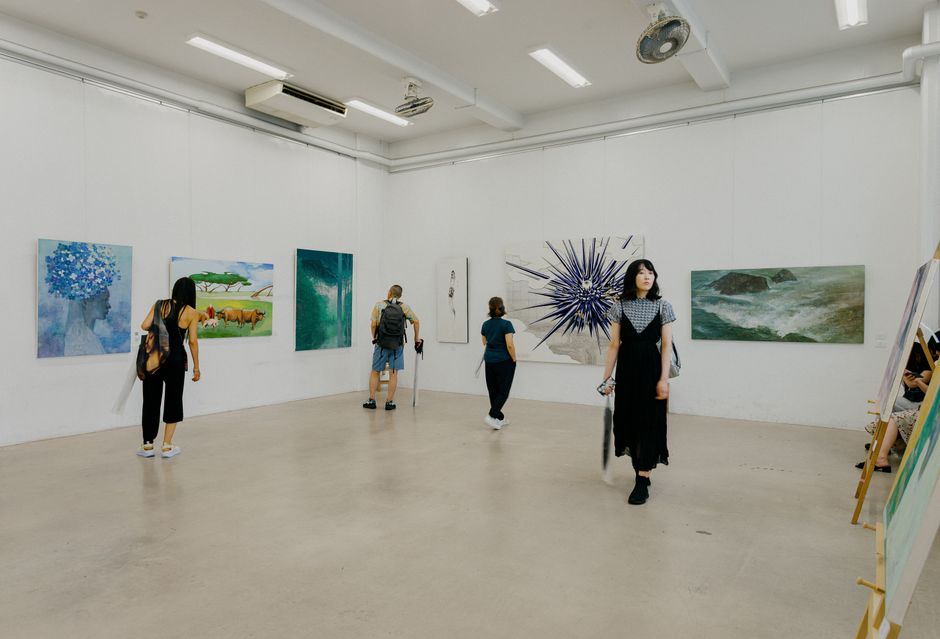
Something shifted in Barcelona's film scene three months ago when a collective calling itself Fotograma Radical began screening banned and censored documentaries in a converted textile warehouse on Carrer de la Virreina. The screenings drew 400 people the first week. By June, they were turning crowds away from showings that packed 800 bodies into a space built for 600.
What started as a weekly midnight showing of films rejected by major festivals and television stations has become the most talked-about cultural happening in the city. Not because the movies are avant-garde or difficult—many are straightforward documentaries about housing struggles, migration, and labour disputes. But because Fotograma Radical is openly rejecting the gatekeeping systems that have long controlled what stories Barcelona sees.
The movement arrives at a moment when Barcelona's cultural institutions feel increasingly distant from the neighbourhoods they claim to serve. The Fundació Joan Miró in Montjuïc operates on a €4.2 million annual budget. Tickets to MNAC, the National Museum of Catalan Art, cost €12 per person. Meanwhile, Fotograma Radical charges €3 per screening, with free entry for people over 65 and under 18.
The warehouse sits at the corner where Carrer de la Virreina meets Còrsega, deep in Gràcia where gentrification pressures have accelerated over the past five years. Rent in this neighbourhood has climbed 28% since 2021, according to data from the Barcelona Tenants Union. The collective chose the space deliberately—not in the Gothic Quarter where tourists cluster around the Cathedral, and not in the Eixample where galleries compete for wealthy collectors.
The programming schedule reveals an intentional curation. Last month, Fotograma Radical screened a documentary about the collapse of Barcelona's construction industry during the 2008 financial crisis. The week before, they showed a banned film about police violence at anti-tourism protests in the Barri Gòtic. These aren't abstract artistic statements. They're documents about this city, screened back to the people who lived through them.
Established venues have noticed. When Fotograma Radical announced their July schedule, which includes a retrospective of films about the 1992 Olympics and its aftermath on Barcelona's working-class neighbourhoods, staff at the Centre de Cultura Contemporània de Barcelona began quietly asking why their own documentary programme doesn't go further. The CCCB sits two kilometres away on Montalegre, operating with institutional caution that Fotograma Radical simply refuses.
Attendance data tells the story. Fotograma Radical has held 48 screenings since April. Average attendance per screening has grown from 240 in the first month to 680 in June. By comparison, the Barcelona International Film Festival, which runs annually every October, draws roughly 150,000 total attendees but concentrates that traffic during two weeks. Fotograma Radical achieves sustained weekly engagement with a fraction of that infrastructure.
Word spreads through WhatsApp groups and neighbourhood assemblies rather than press releases. The collective has 2,400 followers on Instagram, a modest number that translates to packed warehouses because the audience is hyper-local and genuinely committed. People attend because they know someone there, or because the film matters to their block.
What comes next matters. The collective has announced plans to open a second screening space in Poblenou by September. They're also in conversations with the neighbourhood assemblies in Sant Martí about formalising a distribution network for films that larger cinemas refuse to book. If those expansions succeed, Fotograma Radical could force serious questions about why Barcelona's institutional film programming has become so disconnected from the people who actually live here.
That conversation is already happening in living rooms and cafés across Gràcia. It's what locals can't stop talking about.
How does this story make you feel?
Spread the word
About this article
Published by The Daily Barcelona
Daily brief
Free, in your inbox before 7am. Weekdays.
More in culture