Barcelona's Cultural Scene Transforms From Industrial City to Global Creative Force
A century of transformation has turned Barcelona from a provincial industrial city into a destination where artists, musicians, and designers push boundaries daily.
A century of transformation has turned Barcelona from a provincial industrial city into a destination where artists, musicians, and designers push boundaries daily.
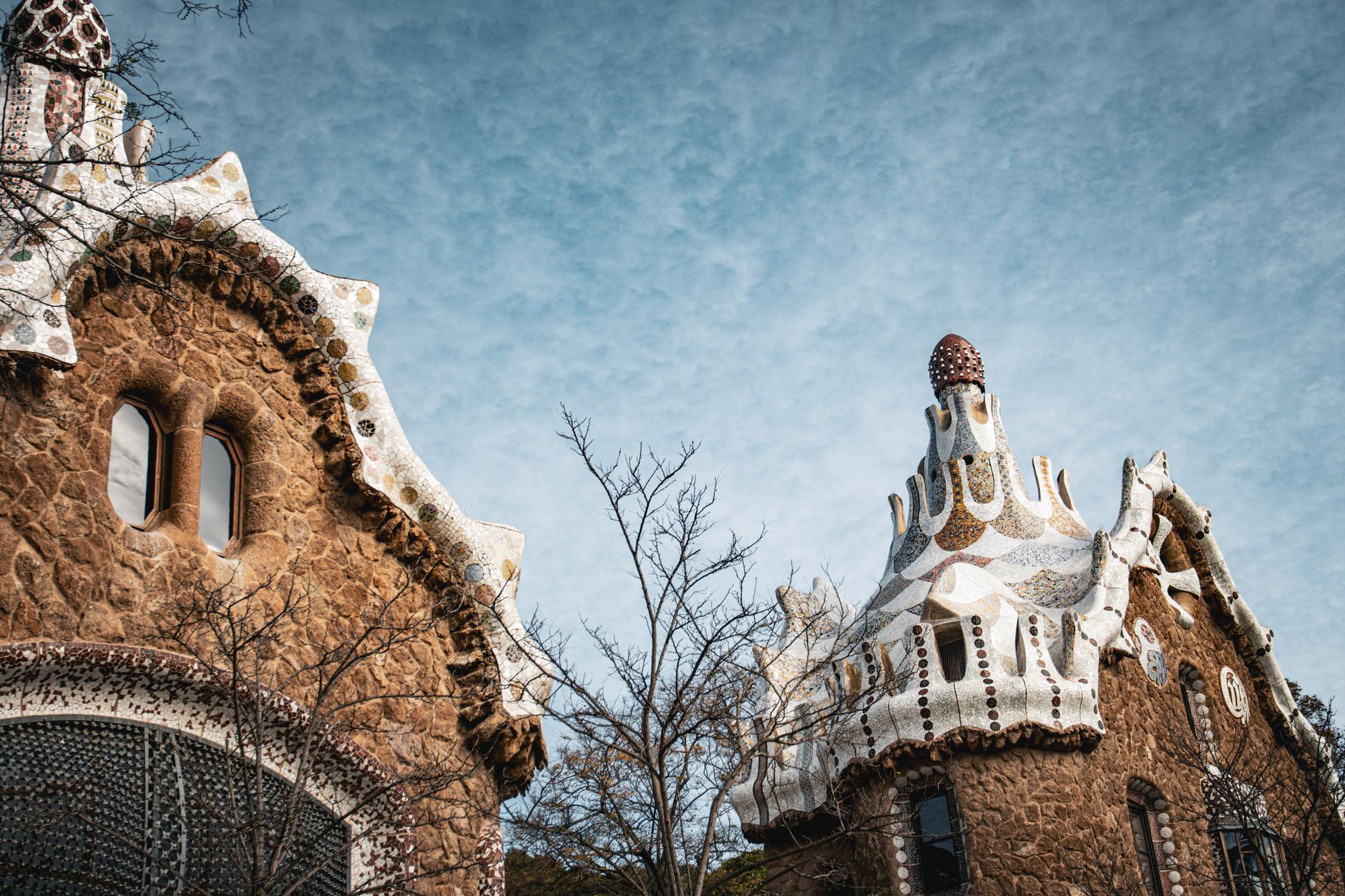
Barcelona's cultural identity didn't arrive fully formed. The city that today hosts cutting-edge contemporary art fairs and underground electronic music venues spent most of the 20th century fighting to define itself beyond industrial production and football. That struggle—and the artists who refused to accept creative limits—shaped everything happening in the city's galleries, concert halls, and street-level performance spaces right now.
The transformation matters because it reveals how cultural scenes survive suppression, thrive on constraint, and ultimately attract global attention through persistence rather than PR. Barcelona's 150-year arc from Antoni Gaudí's singular vision to today's hyperactive creative ecosystem offers lessons for any city trying to punch above its economic weight culturally. In 2026, with global tourism patterns shifting and local artists questioning whether the city has lost its edge, understanding that history becomes essential for knowing what comes next.
Start in 1900. Barcelona was manufacturing textiles and earning serious money, but culturally it looked elsewhere. The Modernisme movement changed that calculus entirely. Gaudí wasn't alone—he was the loudest voice in a generation that insisted Barcelona deserved aesthetics as ambitious as its industrial output. The Palau de la Música Catalana, completed in 1908 on Carrer de Sant Francesc de Paula in the Sant Pere neighbourhood, stands as physical proof of that confidence. A concert hall, yes, but one designed as a manifesto. The stained glass, the sculptural detail, the acoustic geometry—everything declared that Barcelona could create beauty that rivalled Paris or Vienna.
That Modernisme foundation proved more durable than the wealth that funded it. When economic crisis hit the 1930s, when Franco's regime spent 40 years attempting to suppress Catalan cultural expression, the movement's legacy kept the artistic impulse alive. Artists and musicians couldn't build grand concert halls anymore. They built something more dangerous: underground networks.
By the 1980s, Barcelona emerged from dictatorship with pent-up creative energy that exploded across the city. The Olympic Games in 1992 brought money and global visibility, but the real cultural renaissance happened in converted warehouses, independent galleries, and clubs scattered through the Raval and Born neighbourhoods. That's when Barcelona stopped imitating other cities and started generating its own visual language.
Today's Barcelona cultural infrastructure reflects that history of scrappy resilience meeting resources. The MACBA (Museu d'Art Contemporani de Barcelona) opened in 1995 on Plaça dels Àngels and immediately became a gathering point—not just for gallery visitors but for skateboarders, street performers, and people arguing about contemporary art on the plaza itself. That mixing of audiences is deliberate, not accidental. It reflects decades of artistic culture that refused to stay cordoned off in elite spaces.
The city now hosts the Sónar festival, which draws 180,000 attendees annually for electronic music and digital culture programming. Galleries proliferate in neighbourhoods like Sant Antoni and Poblenou, where rents remain lower than in the Gothic Quarter but foot traffic from design-conscious residents keeps venues competitive. The Barcelona Design Center in Poblenou, a former industrial zone, hosts workshops, exhibitions, and studios—nearly a dozen small galleries operate within a five-block radius on Carrer de Pujades alone.
Data tells part of the story. Barcelona's cultural institutions employ roughly 8,000 people directly, according to municipal culture office figures, with another 12,000 in informal creative sectors. Average ticket prices for contemporary art exhibitions run between €10 and €15, making high-culture access less prohibitive than in Madrid or Berlin. The city allocated €97 million to culture in its 2024 municipal budget, approximately 3.2% of total spending—significant but not overwhelming.
What's happening now matters because the global attention brings pressure. Real estate speculation, tourism concentration, and streaming services all threaten the conditions that made Barcelona's scene possible: affordable studio space, local audiences willing to take risks on experimental work, and a sense that artistic rule-breaking could change the city itself. Finding that balance—remaining creatively restless while building sustainable institutions—defines Barcelona's cultural challenge in the next five years.
How does this story make you feel?
Spread the word
About this article
Published by The Daily Barcelona
Daily brief
Free, in your inbox before 7am. Weekdays.
More in culture