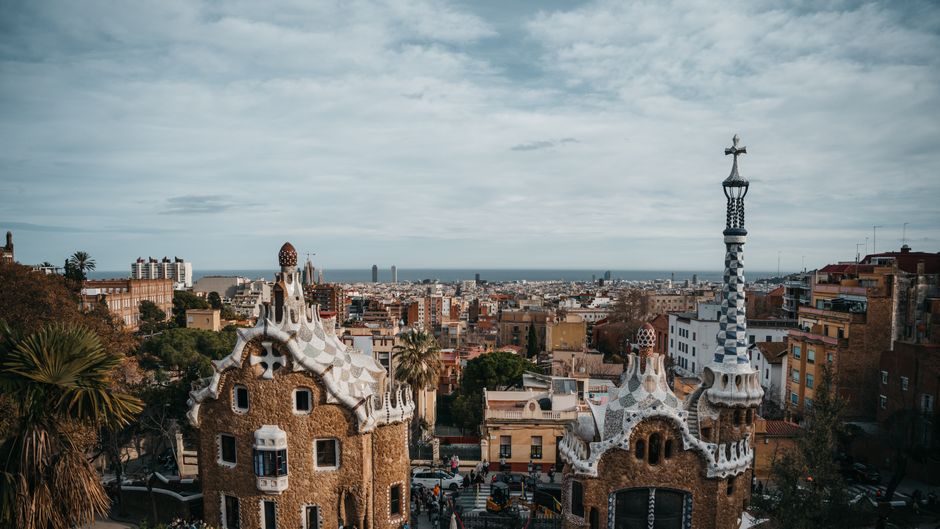
Barcelona's cultural life didn't pause for the heat wave scorching southern Europe this week. Despite temperatures pushing toward 35 degrees Celsius in the city centre, galleries, markets, and performance spaces kept their doors open on Friday, continuing a pattern established over the past three decades as the city reinvented itself from industrial sprawl into a global cultural destination.
The shift matters now because Barcelona's cultural infrastructure—built largely since the 1992 Olympics—faces its first real stress test in an era of climate extremes and geopolitical turbulence. Europe's excess deaths during heat events and infrastructure strain across the continent raise questions about whether venues designed for moderate Mediterranean summers can sustain programming through punishing seasons. Yet the city's cultural calendar has survived worse shocks. Today's offerings reflect that resilience.
From Markets to Galleries: The Evolution on Display
Walk through La Boqueria market on Las Ramblas at 10 a.m. on any summer day and you'll see the DNA of Barcelona's transformation. The market, which dates to 1217, operated as a neighbourhood food hub for centuries. By the 1970s, it had become a tourist attraction. Now it's both—locals still haggle with fruit vendors while international visitors photograph jamón ibérico. The market opens daily at 8 a.m., and by mid-morning on Friday, the narrow aisles were packed despite the heat. Entry is free; a coffee at one of the juice stands costs around €4.
That same evolution—from local function to international draw—repeated itself in Poblenou. The neighbourhood, once a factory district known as Barcelona's Manchester, has transformed since the 1990s. Today, studios and galleries occupy converted industrial spaces. The Poblenou Cultural Centre, housed in a former factory building on Carrer de Pelejà, hosts rotating exhibitions and workshops. On Friday, it was running a summer programme focused on textile design history, admission €6. The shift from manufacturing to creative production happened gradually between 2000 and 2015, when the city actively courted artists and small studios into empty industrial shells.
The Fundació Joan Miró, perched on Montjuïc since 1975, represents an earlier phase of this cultural architecture. It houses the world's largest collection of the Catalan artist's work—3,500 pieces—and charges €15 for entry. The building itself, designed by Josep Lluís Sert, was revolutionary when completed. Friday's visiting hours ran 10 a.m. to 7 p.m., though the museum reduces hours during extreme heat days; staff were monitoring conditions throughout the afternoon.
Numbers Tell the Story of Acceleration
Barcelona welcomed 32.6 million visitors in 2024, according to the city's tourism authority, a figure that has more than doubled since 2000. That surge in footfall directly funded the expansion and maintenance of cultural venues. The city's network now includes 72 public museums and galleries, compared to roughly 35 in 1995. Ticket prices have climbed accordingly—the Picasso Museum on Carrer de Montcada charges €15 for adults, €9 for seniors—but demand remains steady.
The MNAC (Museu Nacional d'Art de Catalunya), reopened in 1995 after a major renovation, draws about 450,000 visitors annually. On Friday afternoon, the museum was issuing timed entry slots to manage crowds in its air-conditioned galleries. The building's location on Montjuïc, elevated above the city, has always given it an institutional gravitas. Its Romanesque art collection alone justifies the €12 entry fee.
If you're in the city today, start early. The cultural beat in Barcelona now demands adaptation to climate and timing. Morning hours—before 1 p.m.—offer comfort and lower crowds. Galleries and museums typically close between 2 and 5 p.m., a legacy of siesta culture that now serves as sensible heat management. Evening programming picks up again at 6 p.m. The city's cultural calendar won't shrink, but how people navigate it has already shifted.