Barcelona's Luxury Blueprint: How New Prestige Projects Are Reshaping the City's Prime Districts
From Eixample's renovation wave to Poblenou's tech-forward towers, developers are redefining what high-end living means in the Catalan capital.
From Eixample's renovation wave to Poblenou's tech-forward towers, developers are redefining what high-end living means in the Catalan capital.
Barcelona's luxury property market is undergoing a quiet revolution. While the city's average sits around EUR 4,000 per square metre, new prestige developments are pushing selective neighbourhoods into rarefied territory—and reshaping entire communities in the process.
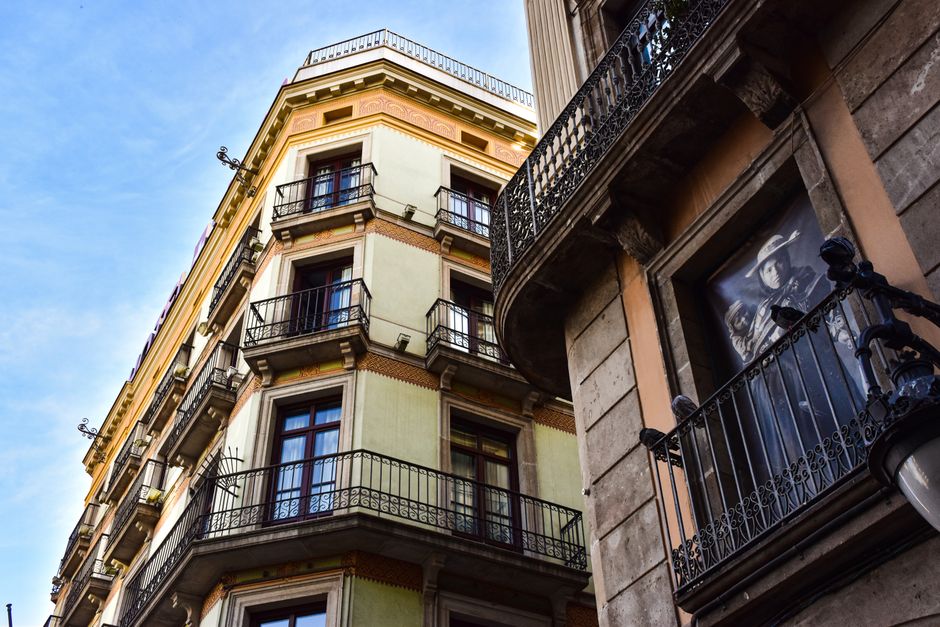
The transformation is most visible in Eixample, where premium renovations of Modernist mansions along Passeig de Sant Joan and Avinguda Diagonal command EUR 8,000 to EUR 12,000 per square metre. These aren't teardowns; they're careful resurrections of early-20th-century architecture, retrofitted with contemporary amenities and smart-home systems. Developers recognise that Barcelona's heritage is its asset. Projects converting historic palaus into luxury apartments with integrated gardens and private lifts appeal to international buyers seeking authenticity alongside modernity.
But the real story is Poblenou's elevation. Once dismissed as industrial Barcelona, the neighbourhood's emergence as a tech district has attracted investment that's fundamentally changed its character. New mixed-use developments along Carrer de Pujades and near the Parc de Centre del Poblenou now blend co-working spaces, boutique hotels, and high-end residential units. These projects target digital entrepreneurs and remote professionals willing to pay EUR 6,000–7,500 per square metre for converted warehouses with exposed brick and loft-style living. The district's proximity to Barcelona's tech hub and young demographic makes it a magnet for developers betting on the post-pandemic work landscape.
Sant Martí and Gràcia neighbourhoods, meanwhile, are experiencing measured growth. Rather than explosive change, these areas are attracting boutique projects—smaller, architect-led developments that respect local character while introducing contemporary design. Properties here command EUR 5,000–6,500 per square metre, attracting families and established professionals who value neighbourhood cohesion over prestige addresses.
The elephant in the room remains tourism. Luxury developments must now navigate Barcelona's tightening regulations on holiday rentals. Smart developers are responding by designing residential units specifically unsuitable for short-term lets—smaller balconies, fewer amenities appealing to tourists—or moving projects away from the Gothic Quarter entirely.
What emerges is a market segmenting sharply. True luxury in Barcelona no longer simply means size or location. It means curated heritage, technological integration, neighbourhood stability, and increasingly, sustainability credentials. As developments proliferate across Eixample, Poblenou, and secondary neighbourhoods, the luxury market's expansion signals confidence in Barcelona's long-term appeal—but also poses questions about authenticity as the city scales new heights.
This article was compiled by AI from the sources linked above and screened before publishing. See our editorial standards.
How does this story make you feel?
Spread the word
About this article
Published by The Daily Barcelona
Daily brief
Free, in your inbox before 7am. Weekdays.
More in Property