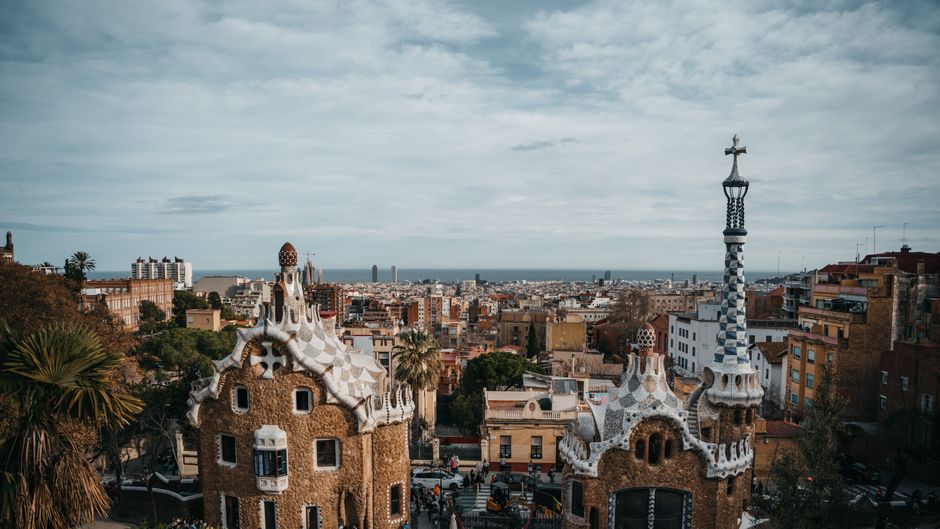
On any given Saturday morning before 9 a.m., the Passeig Marítim is already at capacity. Runners sharing the 4.5-kilometre coastal strip with cyclists, rollerbladers and Nordic walkers — the full catalogue of contemporary outdoor fitness squeezed into a single seafront promenade. This is not incidental. Barcelona's uptake of outdoor physical activity has accelerated sharply since 2023, outpacing comparable European cities by several key measures, according to figures compiled by the Ajuntament de Barcelona's Sport and Youth department published in March 2026.
The timing matters. Across Europe and North America, urban planners and public health bodies are scrambling to reframe cities as exercise infrastructure. London's campaign to restore historic lidos, the repurposing of industrial waterfronts in Hamburg, the explosion of parkrun events across continental Europe — all reflect the same underlying pressure: sedentary urban lifestyles are a public health crisis, and green and blue spaces are the cheapest available remedy. Barcelona already has the assets. The question is whether the city is deploying them intelligently.
The Routes That Are Actually Getting Used
Parc de la Ciutadella remains the city's most democratic fitness space. The 17-hectare park in the Sant Martí and Ciutat Vella border zone draws an estimated 60,000 visitors daily in summer, a figure the Ajuntament cites in its 2025 green-space audit, and a visible proportion of those are running the park's 1.8-kilometre inner loop or using the outdoor calisthenics stations installed under the Pla de Barris programme in 2024. Entry is free. Barriers to use are minimal.
Montjuïc is a different proposition — more demanding, more rewarding, and drawing a distinct demographic. The hill's network of trails, including the Carretera de Montjuïc and the forest paths threading between the Jardins de Laribal and the Castell, attracts serious trail runners and cyclists willing to climb 173 metres of elevation gain. The Barcelona Trail Runners club, which organises monthly group runs from the Plaça Espanya access point, reported a 34 percent membership increase between January 2025 and June 2026, its highest growth rate since the club was founded in 2011. Monthly membership costs €15, with social runs free to attend.
The Collserola Natural Park, technically outside the city limits but reachable within 20 minutes from Plaça Catalunya by FGC rail to Peu del Funicular, deserves more attention than it typically receives. Its 8,000 hectares of oak and pine forest contain marked trails graded from accessible family walks to genuine mountain running terrain. The Fundació Collserola manages the network and recently relaunched its trail signage system in April 2026, adding QR codes linking to elevation profiles and seasonal wildlife warnings.
Global Trends, Local Advantage
The worldwide pivot to outdoor fitness has been well-documented since roughly 2022, accelerated by pandemic-era gym closures that pushed millions of urban residents to rediscover public green space. According to the World Health Organisation's 2025 Global Action Plan on Physical Activity progress report, fewer than one in three European adults meets recommended weekly exercise thresholds. Running and walking remain the most accessible entry points, and cities with coastal or hillside access are consistently recording faster uptake than landlocked equivalents.
Barcelona's Mediterranean climate is the obvious structural advantage — average July temperatures of around 28°C mean early-morning and evening running windows are reliably comfortable, unlike cities further inland or at higher latitudes managing extreme summer heat. The city has also invested in its infrastructure: the expanded Bici-Carril network now covers 247 kilometres, much of it usable by runners where separated from vehicle traffic, and the Eixample Verd superblock plan, still rolling out through 2026, is freeing additional street space from cars.
For anyone wanting to plug into organised outdoor fitness rather than going it alone, the options are genuinely broad. The Nike Run Club hosts weekly Tuesday-evening sessions departing from the Diagonal flagship store, free to join. The Spartan Race returns to Montjuïc on 19 October 2026. And if heat or logistics are a barrier to getting started, the Piscines Municipals de Barcelona network — 20 outdoor and indoor pools citywide — offers a complementary option for those who want structured water-based exercise without venturing onto the trails. Always worth a conversation with your metge de família before ramping up any new training intensity, particularly through the height of summer.