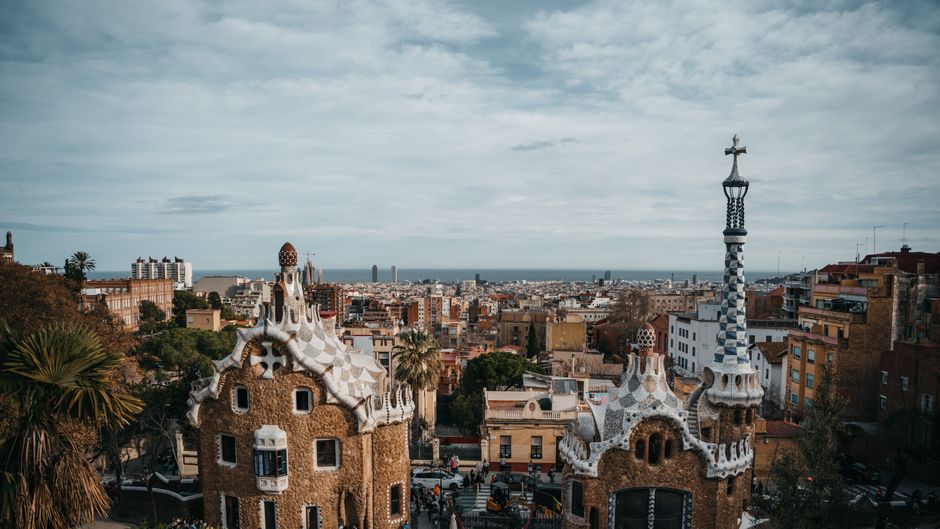
Outdoor running reduces cortisol levels measurably faster than treadmill workouts — and Barcelona, with its 4.2 kilometres of accessible seafront and 8,000 hectares of forested sierra at the city's back, is an almost accidental laboratory for proving it. A 2024 meta-analysis published in Environmental Health Perspectives found that green and blue-space exercise produced a 15 percent greater reduction in self-reported anxiety compared with equivalent indoor exercise. For the thousands of residents lacing up on the Passeig Marítim each morning before the July heat arrives, this is not abstract news.
It matters right now because the science is finally catching up to something Barcelona residents have been doing instinctively for decades. With urban heat becoming a genuine public health pressure — European meteorological agencies recorded June 2026 as the continent's third-hottest on record — the question of when and where to train outdoors is no longer just a fitness choice. It is a physiological calculation.
Where Barcelona's Terrain Meets the Evidence
The Passeig Marítim de la Barceloneta is the city's most popular running corridor, and for once the popular choice is also the scientifically defensible one. A 2023 study from the Barcelona Institute for Global Health (ISGlobal), based in the Poblenou district, tracked 600 urban runners over 12 months and found that those who trained within 500 metres of the coastline reported better sleep quality and lower resting heart rates than inland counterparts. The researchers attributed part of the effect to negative air ions generated by sea spray — a mechanism that remains debated, but the cardiovascular data was harder to dismiss.
Move inland and Parc de la Ciutadella, the 17-hectare garden park in Sant Pere that doubles as an unofficial running circuit, offers a different kind of physiological dividend. Tree canopy coverage of roughly 40 percent inside the park keeps surface temperatures four to six degrees cooler than the surrounding Eixample streets in July, according to Barcelona City Council's urban heat mapping published in May 2025. Shade is not merely comfort — it directly affects core temperature management during moderate-intensity runs, which sports medicine researchers classify as efforts between 55 and 75 percent of maximum heart rate.
The Carretera de les Aigües, a 10-kilometre compacted-earth track running horizontally across the Sierra de Collserola above the Sarrià-Sant Gervasi neighbourhood, is where the altitude variable enters the equation. At roughly 400 metres above sea level, ambient temperatures drop by approximately 2.5 degrees Celsius per 300-metre gain — meaningful on a July morning when the Rambla del Poblenou is already touching 29 degrees by 8 a.m. Research published in the Journal of Sports Sciences in early 2025 confirmed that moderate-altitude trail running also recruits stabiliser muscle groups in the ankle and knee at rates 22 percent higher than flat-surface running, making it a more complete neuromuscular stimulus.
The Practical Science of Timing and Load
None of this matters much without the right schedule. The Consorci de Salut i Social de Catalunya recommends adults accumulate 150 minutes of moderate outdoor aerobic activity per week — a threshold that most regular Barceloneta runners hit by Thursday. But the emerging research interest is not in the volume target; it is in distribution. A 2025 trial from the Universitat de Barcelona's Faculty of Medicine found that splitting that 150-minute weekly total into five shorter sessions, rather than two or three long ones, produced a 9 percent greater improvement in VO2 max over 16 weeks. Short, consistent exposure to outdoor environmental stressors — variable terrain, humidity, mild UV — appears to compound the adaptation signal.
The practical upshot is fairly direct. Early morning runs along the Barceloneta seafront between 6:30 and 8:00 a.m. capture cooler temperatures and lower ozone concentrations, which peak mid-afternoon. The Carretera de les Aigües is best accessed from the Peu del Funicular stop on the FGC rail line from Plaça Catalunya — a three-euro single fare that puts you at the trailhead in 18 minutes. And Parc de la Ciutadella's perimeter loop, at just under 2 kilometres, is a sensible base for interval sessions on days when longer excursions are not feasible. Anyone managing an existing condition or returning from injury should check in with a local sports medicine specialist — Hospital de l'Esperança in Gràcia runs a dedicated sports health unit — before ramping up outdoor mileage in summer heat.