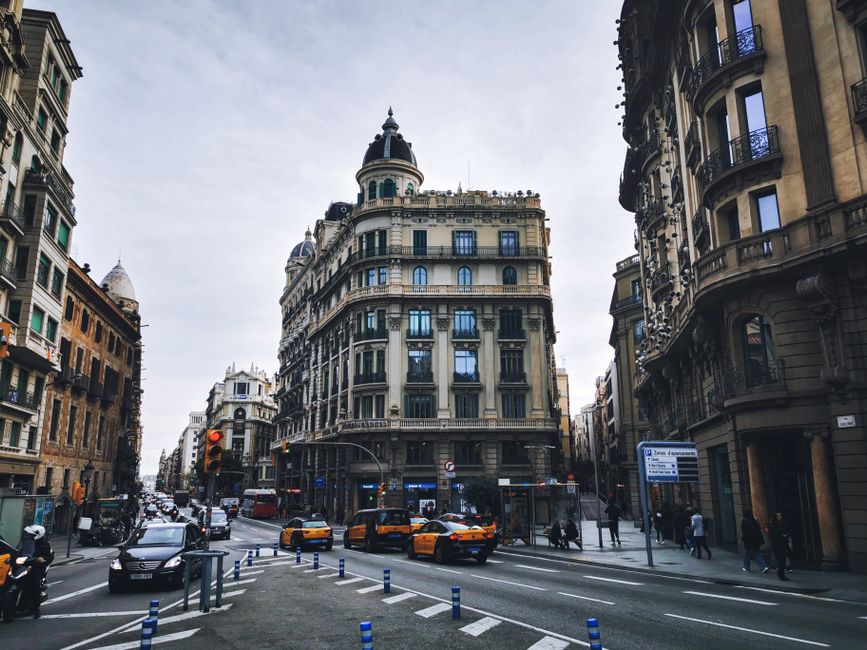
Sunday afternoons in the Gràcia neighbourhood smell different from the rest of the week. Sofrito bubbles on gas rings. Chickpeas soak in ceramic bowls. The ritual has a name that predates the Instagram meal-prep trend by generations — cuinar per endavant, cooking ahead. What Barcelona's grandmothers have always done quietly, nutritionists and dietitians are now prescribing loudly, and for good reason.
July is, statistically, the worst month for dietary discipline in this city. Temperatures crossed 33°C in central Barcelona by the first week of the month, school is out or nearly finished, and office workers on compressed summer schedules — the jornada intensiva that runs from 8am to 3pm — find themselves grabbing lunch from whichever bar is closest to the office rather than eating the way they intended to. The result, according to data published in May 2026 by the Agència de Salut Pública de Catalunya, is that 61 percent of adults in the Barcelona metropolitan area report eating fewer than three portions of vegetables daily during July and August, compared with 44 percent the rest of the year.
The fix is not complicated. It is, however, a commitment of roughly two to three hours on a weekend day — time that pays dividends across five working days of lunches, dinners and school lunchboxes.
Where to shop, and what to cook first
The Mercat de l'Abaceria in the Gràcia district and the Mercat de Sant Antoni on Carrer del Comte d'Urgell are both well-stocked by 9am Saturday, when the best seasonal produce arrives. A serious weekly shop for a family of four — built around tomatoes, aubergine, white beans, oily fish and seasonal stone fruit — costs roughly €35 to €45 at either market, significantly less than the equivalent in a supermarket chain and with considerably better raw material to work with.
Dietitians affiliated with the Col·legi de Dietistes-Nutricionistes de Catalunya recommend building a batch-cook session around three anchor dishes: a large pot of legumes (lentils or chickpeas), a tray-baked vegetable base that can be repurposed across multiple meals, and a protein that keeps well for four days refrigerated, such as roasted chicken thighs or baked sardines. From those three foundations, a family can assemble six to eight distinct meals without repeating themselves. Add a grain — farro, brown rice, or pa de pagès torn into salads — and the architecture of a week's eating is essentially complete by Sunday evening.
The Col·legi offers free downloadable weekly planners through its website, including a Mediterranean-adapted version specifically designed for the jornada intensiva worker who eats the main meal at midday. Several community centres in Nou Barris and Sant Martí have also been running Saturday morning batch-cook workshops since March 2026, part of the Ajuntament de Barcelona's Pla d'Alimentació Saludable 2024–2028, which earmarks €4.2 million over four years for food literacy programs across the city's ten districts.
Keeping it cold, keeping it safe
Food safety matters more in July than in January. Cooked legumes and rice should be cooled quickly — within two hours — and refrigerated at or below 4°C. Glass containers work better than plastic for both safety and flavour; a set of four 1-litre Weck jars, available at the hardware stores along Carrer de Provença in the Eixample, costs around €22 and will last years. Anything containing fish should be consumed within 48 hours, not the four-day window that applies to chicken or vegetable dishes.
Families with children in Barcelona's public school system should also be aware that the Consorci d'Educació de Barcelona extended its beques menjador — subsidised school lunch grants — through the 2025–2026 academic year, covering up to 100 percent of lunch costs for qualifying families. That removes one daily meal from the prep equation entirely for many households.
The practical upshot: pick two vegetables you will actually eat cold, one protein that travels without a microwave, and one grain. Prep those four things on Sunday. The Mediterranean diet did not become the world's most-studied healthy eating pattern because it was complicated. It endured because it was designed, from the start, around real life — including the kind of real life where Wednesday is already exhausting before it begins. Consult a dietitian registered with the Col·legi de Dietistes-Nutricionistes de Catalunya for advice tailored to your household's specific needs.