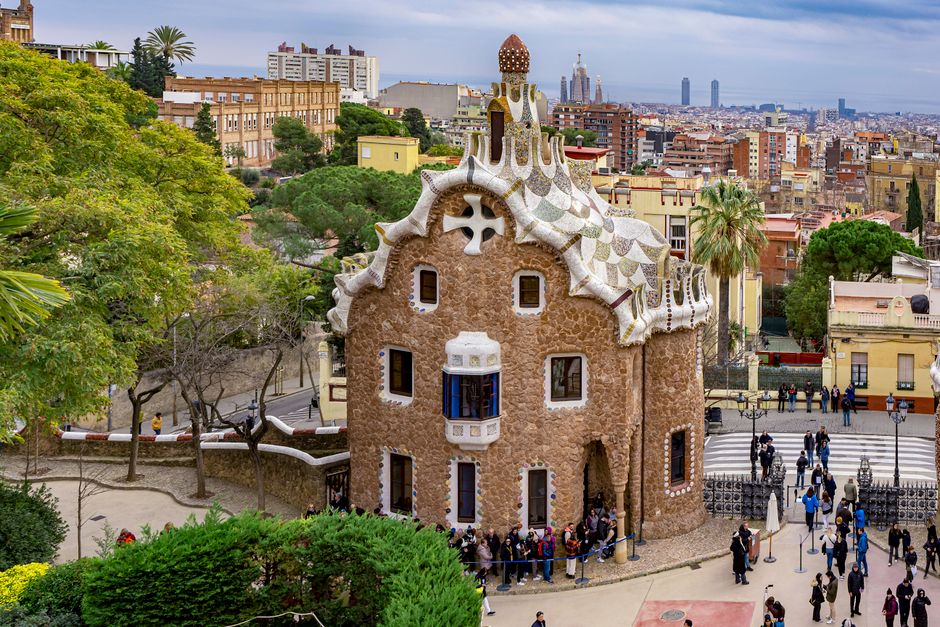
Barcelona's residential property market crossed a psychologically significant threshold in the second quarter of 2026, with average transaction prices in the Eixample district touching €5,200 per square metre on multiple recorded sales — well above the citywide average of €4,000 per square metre tracked by the Catalan land registry, the Registradors de Catalunya. Notarial data for May, the most recent month available, shows no sign of reversal.
The timing matters. The Generalitat de Catalunya's rent-containment regulations, in force since late 2023 under the Llei pel Dret a l'Habitatge, were supposed to cool investor appetite in declared stressed-market zones, which cover virtually all of Barcelona's 73 neighbourhoods. Instead, suppressed rental yields appear to be pushing capital into outright purchases, driving sale prices higher even as rental listings shrink. Buyers who cannot compete on price are being pushed further out — or into the public auction calendar, where the results are equally sobering.
What the Auction Data Is Actually Showing
Forced-sale auctions conducted through the Servei de Subhastes of the Agència Tributària de Catalunya have drawn unusually competitive bidding in the first half of this year. Properties in Sant Martí — historically a buyer's fallback when Eixample and Gràcia priced them out — cleared auction at between €3,600 and €4,100 per square metre in June, figures that property analysts at the Col·legi d'Agents de la Propietat Immobiliària de Barcelona describe as historically atypical for distressed stock. A two-bedroom flat on Carrer de Pallars in Poblenou, a street that five years ago attracted modest interest, attracted nine registered bidders at a June 18 auction and sold for 23 percent above its reserve price.
The Poblenou result is not an outlier. The 22@ innovation district along Avinguda Diagonal and the adjacent Rambla del Poblenou corridor have absorbed sustained demand from tech-sector workers whose employers — several anchored to the Mobile World Congress ecosystem — negotiate multi-year leases in the area. That employment base has effectively created a price floor in Sant Martí that did not exist a decade ago.
Gràcia tells a slightly different story, though not a reassuring one for affordability. The neighbourhood's per-square-metre average sat at approximately €4,600 in Q1 2026 according to the Idealista price index published in April, with the streets immediately surrounding the Mercat de l'Abaceria commanding premiums above that. Small studio flats of under 40 square metres — traditionally the entry-level product for first-time buyers — are listed at prices that require mortgage debt equivalent to 11 or 12 times median net household income in the city, well above the Bank of Spain's informal guidance of no more than eight times.
Who Is Still Buying, and How
Cash buyers account for a disproportionate share of closed transactions. Industry figures compiled by the Consell de Col·legis de Notaris de Catalunya indicate that in central Barcelona postcodes, roughly 38 percent of residential purchases in the first four months of 2026 involved no mortgage financing — a proportion that rose from 29 percent in the equivalent period of 2024. That shift reflects both the continued presence of non-resident European buyers and a cohort of local upgraders releasing equity from properties purchased before 2015.
For everyone else, the calculus is brutal. A 75-square-metre flat in the northern stretch of Eixample Esquerra — still considered a secondary location within the district — now requires a deposit of roughly €80,000 to satisfy standard loan-to-value limits, assuming a purchase price near €390,000. The Ajuntament de Barcelona's Habitatge Metròpolis Barcelona programme, which offers subsidised purchase assistance to households earning below specific income thresholds, received 4,200 applications in its most recent intake window against fewer than 300 available units.
Buyers who cannot access that programme and lack family equity should watch the autumn auction calendar closely: the Agència Tributària typically publishes its Q3 forced-sale listings in September, and analysts expect a fresh tranche of properties from insolvency proceedings initiated during the 2024 credit tightening cycle. Competition will be fierce, but reserves are sometimes set below current market levels. For most people, though, the data points in one direction: Barcelona's ownership market is becoming a smaller club, and the entrance fee keeps rising.