The numbers are unambiguous. Barcelona's luxury residential market closed the first half of 2026 with average transaction prices in premium Eixample addresses exceeding €6,500 per square metre — well above the city-wide average of €4,000 — and agents handling high-end stock report that discretionary listings on Passeig de Gràcia and Carrer d'Enric Granados rarely survive more than three weeks before going under offer. For buyers attempting to enter this market for the first time, the pace alone can be disorienting.
Why does it matter right now? A combination of factors has compressed the window between listing and sale to historic lows. Post-pandemic relocation demand from northern European buyers — particularly from Germany, the Netherlands and Scandinavia — has not dissipated. Meanwhile, the Catalan government's ongoing restrictions on tourist rental licences under the 2024 Habitatge Pla Territorial are pushing a slice of formerly short-let stock back into the sales market, but rarely at a discount. Buyers who hesitated twelve months ago are discovering that patience cost them roughly eight to twelve percent in additional price exposure.
Where the Premium Postcode Map Actually Sits
Barcelona's luxury tier is not monolithic. The Eixample Esquerra and Eixample Dreta together account for the bulk of prestige transactions, with renovated modernista flats — those retaining original Domènech i Montaner or Puig i Cadafalch detailing — commanding the steepest premiums. A well-restored 200-square-metre apartment on Carrer de Provença or Carrer de Mallorca can clear €1.3 million without attracting a second glance from the sales agent.
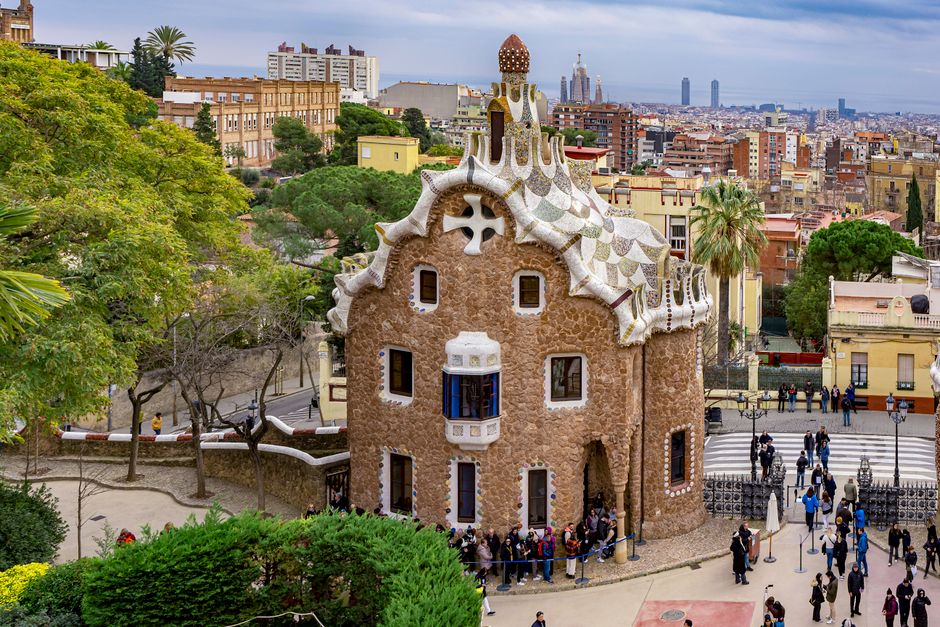
Poblenou is the market's most interesting subplot. The 22@ technology district has matured enough that new-build penthouses along Carrer de Pallars and Rambla del Poblenou are now asking €5,200 per square metre, roughly double where the neighbourhood sat five years ago. Gràcia — particularly the upper streets bordering Park Güell — attracts buyers seeking boutique villa-style properties, with detached or semi-detached homes on Carrer de l'Or and nearby streets trading between €1.8 million and €3.5 million depending on terrace footage and light.
Sant Martí, immediately south of Poblenou, is where advisers at firms including Lucas Fox and Barnes International Realty are currently directing clients with budgets between €700,000 and €1.1 million who want proximity to premium without paying Eixample rates.
What First-Timers Consistently Get Wrong
The single most common error is treating Barcelona's luxury market like a conventional residential purchase and arriving without pre-arranged financing documentation. Sellers of properties above €900,000 routinely require proof of funds or a mortgage pre-approval letter — increasingly from a recognised Spanish bank such as CaixaBank or Sabadell — before granting a formal viewing of occupied properties.
Legal due diligence here carries additional complexity. Barcelona's Registre de la Propietat records can flag pre-emptive purchase rights held by the Ajuntament de Barcelona under the city's Dret de Tanteig i Retracte program, which gives the municipality first refusal on certain residential properties in designated areas. Buyers who skip a full nota simple check before signing an arres contract — the standard 10% deposit agreement — have found transactions unwound weeks later. A gestor or abogado specialising in property, rather than a generalist solicitor, is worth the additional fee.
Budget allocation matters too. On a €1.2 million purchase, buyers should ring-fence a further €130,000 to €145,000 for purchase taxes under Catalonia's Impost de Transmissions Patrimonials, notary fees, registry costs and agent commission where applicable. That figure surprises almost every first-timer who has modelled their offer based solely on the asking price.
The practical advice for anyone moving seriously in this market before the autumn: appoint a buying agent before shortlisting properties, not after. Several off-market listings in Eixample Dreta and upper Gràcia never reach the portals — they circulate through agency networks, and without representation, a first-time buyer simply will not see them. The summer slowdown that used to buy browsers an extra month of breathing room has shortened considerably. Serious buyers should have their structure in place by September, when international interest traditionally sharpens again after the August hiatus.