Barcelona's First-Home Policy Shift: How Planning Changes Are Reshaping Buyer Access
New municipal grants and stricter zoning rules in Poblenou and Gràcia are fundamentally altering financing options and affordability for young Barcelona buyers.
New municipal grants and stricter zoning rules in Poblenou and Gràcia are fundamentally altering financing options and affordability for young Barcelona buyers.
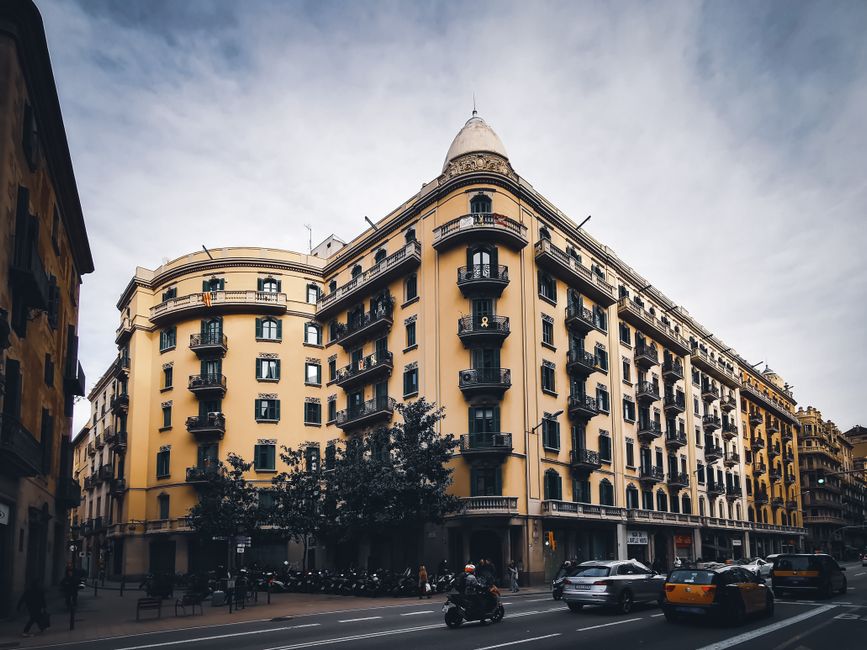
Barcelona's first-time homebuyer landscape is experiencing its most significant transformation in a decade, driven by a cascade of policy decisions that are already reshaping where young families can afford to settle.
The Barcelona Municipal Government's updated First Home Acquisition Grant Scheme, effective since March 2026, now offers up to €25,000 for buyers under 35 purchasing properties below €350,000—a threshold that has created a clear two-tier market. Properties in Sant Martí and Gràcia, traditionally priced at €3,200–€3,600 per square metre, now attract competing buyers armed with municipal backing, while Eixample properties hovering above €400,000 remain accessible only through conventional financing.
Parallel to these grants, the City Council's Strategic Urban Planning Initiative has tightened residential zoning in high-density areas. Poblenou, once positioned as an affordable alternative for tech workers and younger professionals, faces new restrictions on conversion properties. The neighbourhood's average price climbed from €3,100 to €3,850 per square metre within eighteen months—partly driven by scarcity. Several developments along Ronda Sant Martí that might have yielded affordable stock two years ago are now blocked pending revised sustainability assessments.
This regulatory environment has forced banks to recalibrate lending. Institutions including CaixaBank and BBVA have tightened loan-to-value ratios for first-time buyers in neighbourhoods experiencing rapid appreciation, even as the grants programme theoretically expands affordability. One unintended consequence: buyers are now stretching repayment periods to 35 years to accommodate higher purchase prices, extending financial exposure considerably.
The impact cuts both ways. In Gràcia—where family-focused refurbished apartments around Plaça del Sol and Mercat de l'Abaceria are hitting the market—the grant scheme has genuinely accelerated access for Barcelona-born professionals priced out two years ago. Yet in Sant Martí, investment demand from non-resident portfolio builders has partly offset the benefit intended for owner-occupiers.
Analysts tracking the Barcelona Chamber of Commerce report that first-time buyer registrations are up 31% year-on-year, but average purchase prices have risen 12%, suggesting the grants are enabling more people to enter the market at slightly higher price points rather than dramatically expanding true affordability.
For buyers navigating this terrain, understanding which neighbourhoods fall within grant-eligible bands, anticipating planning bottlenecks, and engaging with mortgage brokers experienced in Barcelona's evolving criteria has become essential. The window for making informed decisions is narrow—further policy adjustments are expected by Q4 2026.
This article was compiled by AI from the sources linked above and screened before publishing. See our editorial standards.
How does this story make you feel?
Spread the word
About this article
Published by The Daily Barcelona
Daily brief
Free, in your inbox before 7am. Weekdays.
More in Property


