Sant Martí's Social Housing Push: How New Projects Are Reshaping Barcelona's East End
Two major affordable housing developments along Avinguda Diagonal and near Parc del Centre could ease pressure on one of the city's most contested neighbourhoods.
Two major affordable housing developments along Avinguda Diagonal and near Parc del Centre could ease pressure on one of the city's most contested neighbourhoods.
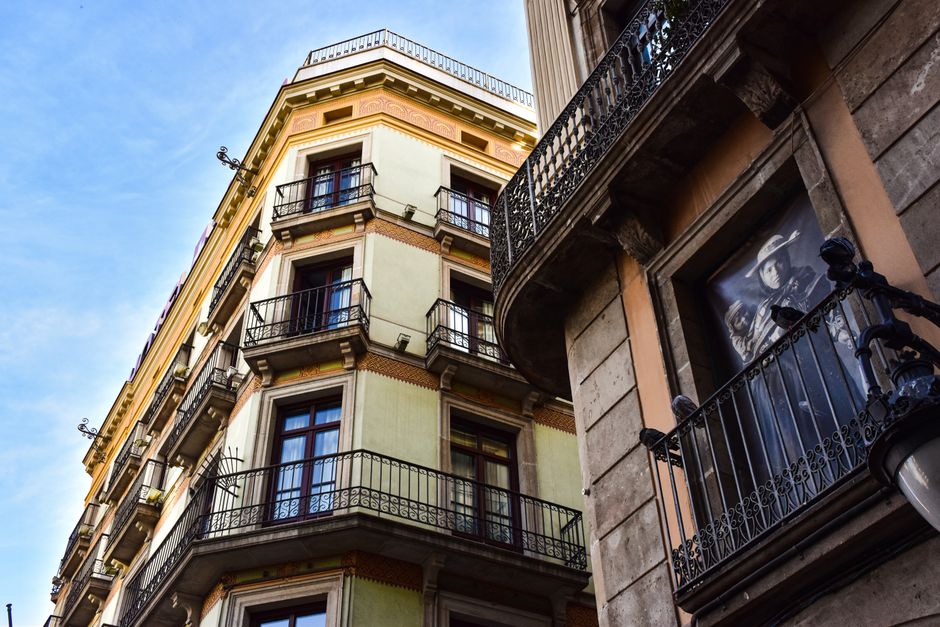
Sant Martí is changing. Once dismissed as industrial periphery, the district east of Passeig de Sant Joan has become one of Barcelona's most sought-after addresses—a shift that has priced out the very communities who built it. Now, two substantial social housing projects are attempting to recalibrate the neighbourhood's demographic future.
The first, a 156-unit development near Plaça de les Glòries Catalanes, breaks ground this autumn on what was formerly vacant industrial land. Operated by Habitatge Social de Catalunya, the project will deliver studios and two-bedroom units at approximately €2,200 per month—roughly half the current Sant Martí average of €4,000 per square metre. For families already rooted in the neighbourhood's traditional working-class pockets around Carrer de Tànger and Carrer de Còrsega, the timing addresses a critical gap.
"The risk is real," explains the Associació de Veïns de Sant Martí, which has documented displacement pressure accelerating since 2022. Young professionals and remote workers, drawn by proximity to Poblenou's tech corridor and creative industries, have driven rental inflation beyond what local service workers—nurses, educators, retail staff—can sustain. This second project, a 203-unit complex alongside Parc del Centre, attempts to anchor affordability through a mixed-tenure model: 60% social rent, 40% subsidised ownership at prices starting €185,000.
Both schemes reflect Barcelona's revised affordable housing mandate, introduced last year, requiring 30% social provision on new developments over 2,500 square metres. The city council's 2024-2034 strategic plan targets 11,000 additional affordable units; these two Sant Martí projects represent 359 of that total—meaningful but incremental.
The broader question lingers: can supply-side intervention outpace demand from investment funds and short-term rental operators? Gracia and Sant Martí remain epicentres of tourist accommodation conflict, with licensed tourist flats occupying units that might otherwise house residents at market rates. The council's recent tightening of tourist licensing may provide relief, though enforcement remains patchy.
What's certain is that Sant Martí's identity hangs in the balance. The neighbourhood's proximity to Parc del Centre, its emerging cultural institutions, and its distance from over-touristed Gothic Quarter make it genuinely liveable—and increasingly, genuinely unaffordable. These developments won't solve Barcelona's housing crisis, but they signal that the city council recognises the stakes. For Sant Martí's original residents, it's a start.
This article was compiled by AI from the sources linked above and screened before publishing. See our editorial standards.
How does this story make you feel?
Spread the word
About this article
Published by The Daily Barcelona
Daily brief
Free, in your inbox before 7am. Weekdays.
More in Property


