Barcelona's New Build Boom: How Fresh Approvals Are Reshaping the Market—and Your Budget
Record planning permissions across Poblenou and Sant Martí are accelerating supply—but prices are climbing faster than construction timelines.
Record planning permissions across Poblenou and Sant Martí are accelerating supply—but prices are climbing faster than construction timelines.

Barcelona's property market is in a curious moment. New development approvals have surged across neighbourhoods like Poblenou and Sant Martí over the past eighteen months, yet buyers are still paying close to the €4,000-per-square-metre city average—or significantly more in trophy zones. Understanding what's actually driving prices requires looking beyond the headlines about construction cranes.
The Ajuntament approved a notable cluster of mixed-use schemes in Poblenou's revitalized industrial corridor, targeting both residential and office space as the neighbourhood cements its position as Barcelona's tech hub. These projects promise to add several hundred new units over three to four years. Yet paradoxically, existing stock in the district has appreciated 8–12 per cent annually since 2024, as buyers rush to secure properties before completion. The scarcity psychology is real: investors and owner-occupiers alike are bidding up pre-construction apartments, locking in today's prices rather than waiting for 2028 or 2029 completion.
Sant Martí is experiencing similar dynamics. Recent approvals for mid-rise residential complexes near Llacuna station have generated fierce competition, with off-plan units commanding a 6–10 per cent premium over comparable resale properties in adjacent areas. The transport connectivity story is compelling—but it's also inflating expectations among developers, who are pricing new stock assuming continued migration inward from suburbia.
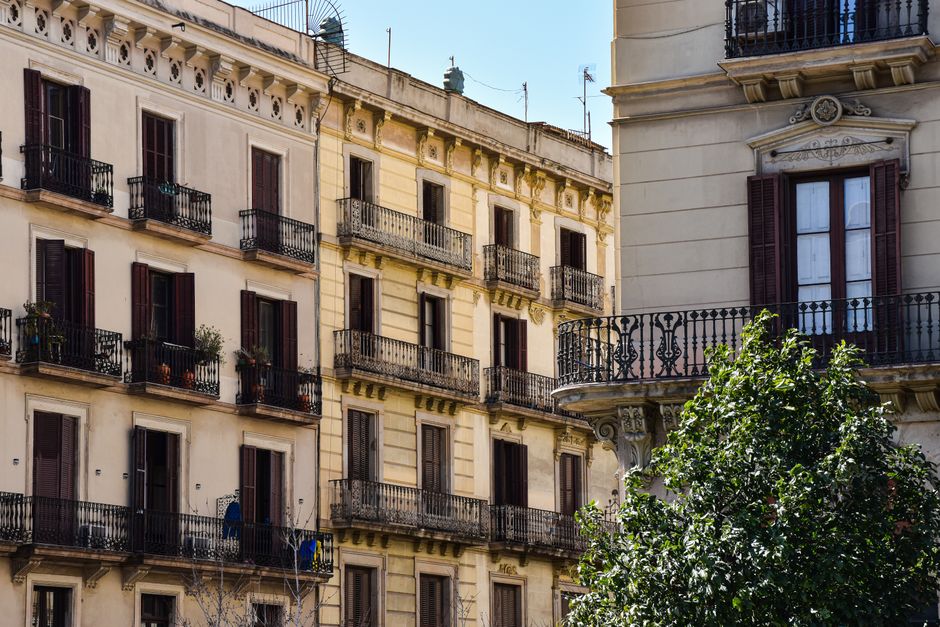
Eixample remains the market's premium anchor, with certain pockets now touching €5,500 per square metre for newly completed properties. The constraint here is different: available land for new development is minimal, and reform of existing modernista flats dominates new activity rather than ground-up construction. This scarcity is a price driver in itself.
What should buyers and investors know right now? First, off-plan pricing often reflects speculative enthusiasm rather than economic fundamentals. Developers are front-loading margins in early sales phases; late-stage units may offer better value. Second, completion timelines are critical. A 2027 delivery date exposes you to interest-rate and market volatility; longer horizons carry greater risk. Third, neighbourhood maturity matters: Poblenou's tech narrative is real but still emerging, whereas Eixample's prestige is settled.
The torrent of new approvals suggests supply will eventually catch up to demand—likely in 2028–2029. That inflection point will test whether current price momentum is justified or merely speculative. Savvy buyers should resist FOMO-driven bidding and instead focus on genuine location fundamentals: transport, amenities, and long-term neighbourhood trajectory rather than construction timelines alone.
This article was compiled by AI from the sources linked above and screened before publishing. See our editorial standards.
How does this story make you feel?
Spread the word
About this article
Published by The Daily Barcelona
Daily brief
Free, in your inbox before 7am. Weekdays.
More in Property