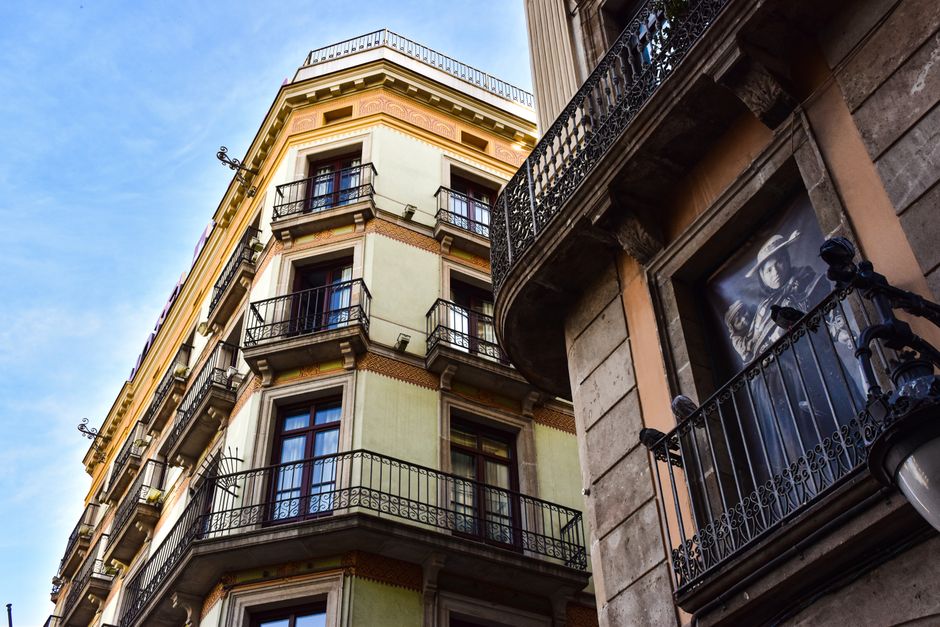
For years, Sant Andreu occupied a peculiar space in Barcelona's property consciousness: too far north for the Eixample cognoscenti, too unglamorous for Instagram, yet quietly accumulating the infrastructure of a neighbourhood in transition. Today, it's becoming impossible to ignore.
The numbers tell a story. While Eixample commands upwards of €5,500 per square metre and Gràcia hovers near €4,800/sqm, Sant Andreu still trades at approximately €3,200–€3,600/sqm—a gap that first-time buyers armed with government grants are rapidly exploiting. The Catalan government's Ajuts per a l'accés a l'habitatge jove (Youth Housing Access Grants) have made the difference between aspirational and achievable for buyers aged 18–35, with subsidies up to €18,000 in some cases when purchasing below regional price caps.
The transformation centres on three converging forces. The Passeig de Santa Coloma—once a neglected thoroughfare—is emerging as a genuine civic spine, anchored by independent restaurants, the renovated neighbourhood library, and improved public transport connections via the L5 metro line. Meanwhile, the redevelopment of the old industrial zones near Parc de la Pegaso is attracting creative businesses priced out of Poblenou. Young professionals working in the tech district are discovering Sant Andreu offers what Poblenou once promised: authenticity at a fraction of the current cost.
Real estate agents report a 34% year-on-year increase in first-time buyer enquiries for the neighbourhood. Properties on Carrer de Còrsega and around Plaça de Sants are shifting faster than in previous years, with developers noting growing appetite for renovated three-bedroom flats in the €450,000–€550,000 range—manageable with combination financing and available grants.
The city council's efforts matter too. Investment in streetscape improvements, the expansion of bike lanes along Avinguda Meridiana, and the sanctioned crackdown on tourist rentals (which plague Sant Andreu far less than central districts) are tilting incentives towards permanent residents rather than short-let speculators.
Sant Andreu isn't Gràcia—yet. It lacks the cafè culture and village charm. But that's precisely the point: it's cheaper, less saturated, and genuinely changing. For first-time buyers juggling affordability against grant eligibility thresholds, it represents something increasingly rare in Barcelona—a neighbourhood where ambition and budget can actually align.
This article was compiled by AI from the sources linked above and screened before publishing. See our editorial standards.