Barcelona's Digital Archive Push Targets Thousands of Duplicate Images Clogging City Records
A municipal data-cleaning drive this week exposed how redundant photographs have been quietly inflating Barcelona's public image databases for years.
A municipal data-cleaning drive this week exposed how redundant photographs have been quietly inflating Barcelona's public image databases for years.
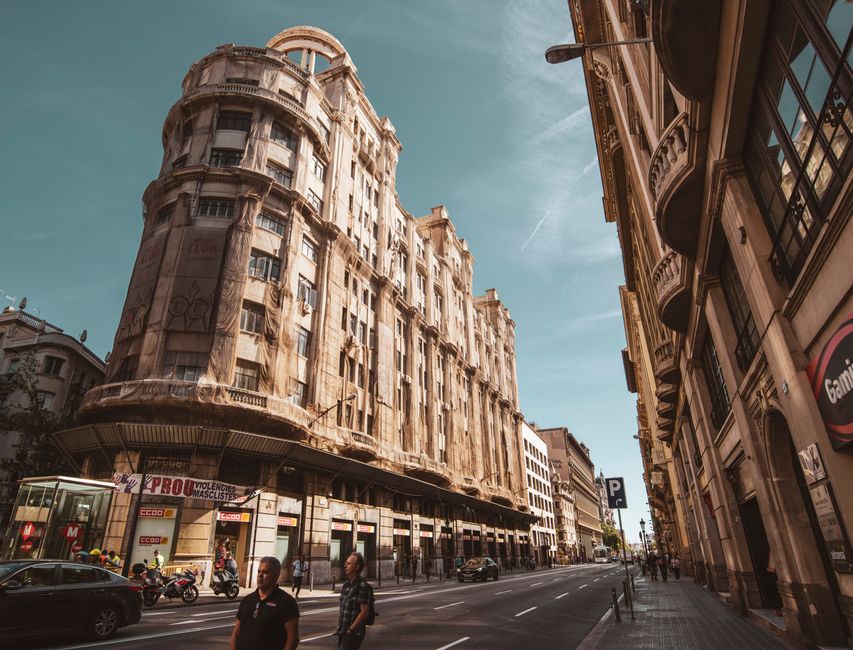
Barcelona's city archive has moved this week to address a backlog of duplicate images embedded across dozens of municipal websites, internal document repositories and the publicly accessible digital collections managed by the Arxiu Municipal de Barcelona. The cleanup effort, which began in earnest on Monday, targets an estimated tens of thousands of redundant files spread across platforms that serve everything from urban planning applications to the tourist-facing portals run by Turisme de Barcelona.
The timing matters. City Hall has been expanding its digital infrastructure rapidly since 2024, when Mayor Jaume Collboni committed to a broader open-data strategy as part of the Barcelona Digital City plan. That expansion brought new portals, merged old databases and pulled in image assets from neighbourhood councils across all ten districts — a process that, according to internal planning documents reviewed by The Daily Barcelona, created fertile ground for duplicate files to accumulate undetected.
Duplicate image replacement is less glamorous than smart-city announcements, but the practical consequences are real. When a photograph of the Mercat de Sant Josep de la Boqueria appears under fourteen different file names across three separate content management systems, municipal web editors pulling assets for new pages routinely republish the same image repeatedly, distorting usage data and inflating storage costs on servers hosted through the city's contract with the Barcelona Supercomputing Center at the Parc Científic de Barcelona in the Diagonal corridor.
The Eixample district's neighbourhood council flagged the problem in a written communication to the Gerència de Recursos i Organització in May, noting that a single renovation project on Carrer d'Aragó had generated a folder of 340 photographs of which a preliminary scan identified 89 as exact or near-exact duplicates. That figure has since been cited internally as representative of the broader scale across all districts.
The Foment de Ciutat agency, which oversees public-space regeneration projects including the ongoing works along the Rambla del Poblenou and the Sant Antoni market surroundings, is one of several bodies whose image libraries are being audited this week. Foment maintains its own digital asset repository, separate from the central Arxiu Municipal system, meaning duplicates that originate there do not automatically surface in citywide scans.
The city is using perceptual hashing software — a technique that compares compressed visual fingerprints of images rather than checking identical byte-for-byte copies — to detect near-duplicates created by resizing, recompression or minor cropping. This matters because municipal photographers often export the same raw file at multiple resolutions for different publishing needs, generating clusters of visually identical but technically distinct files.
Storage is not free. Barcelona's contract for municipal cloud and server infrastructure, renewed in late 2024, runs to several million euros annually across all departments. While the city has not published a breakdown attributable solely to image storage, comparable audits in Madrid and Lisbon have typically found that duplicate media files account for between 15 and 25 percent of total digital asset storage in large urban administrations — a proportion that translates directly into wasted budget.
The Arxiu Municipal de Barcelona, whose reading room sits on Carrer de Santa Llúcia in the Gothic Quarter just metres from the Cathedral, is coordinating the replacement workflow. Where duplicates are confirmed, a canonical master file is designated and all other instances are redirected through a URL alias rather than deleted outright — a precaution to avoid breaking links in older planning documents and public consultation records that may reference specific file paths.
City editors and neighbourhood administrators who manage content on Barcelona.cat have until 31 July to validate flagged images in their sections. Those who miss the deadline will have replacements applied automatically by the central systems team. For residents or journalists who notice broken image placeholders on municipal pages during this period, the Arxiu's digital services desk at arxiu@bcn.cat is taking reports. The full audit is scheduled to conclude before the August municipal recess.
How does this story make you feel?
Spread the word
About this article
Published by The Daily Barcelona
Daily brief
Free, in your inbox before 7am. Weekdays.
More in News


