How Barcelona's Short-Term Rental Crackdown Became a Battle Over the City's Own Image
The fight to reclaim neighbourhood housing from tourist apartments has roots stretching back more than a decade — and the endgame is still being written.
The fight to reclaim neighbourhood housing from tourist apartments has roots stretching back more than a decade — and the endgame is still being written.
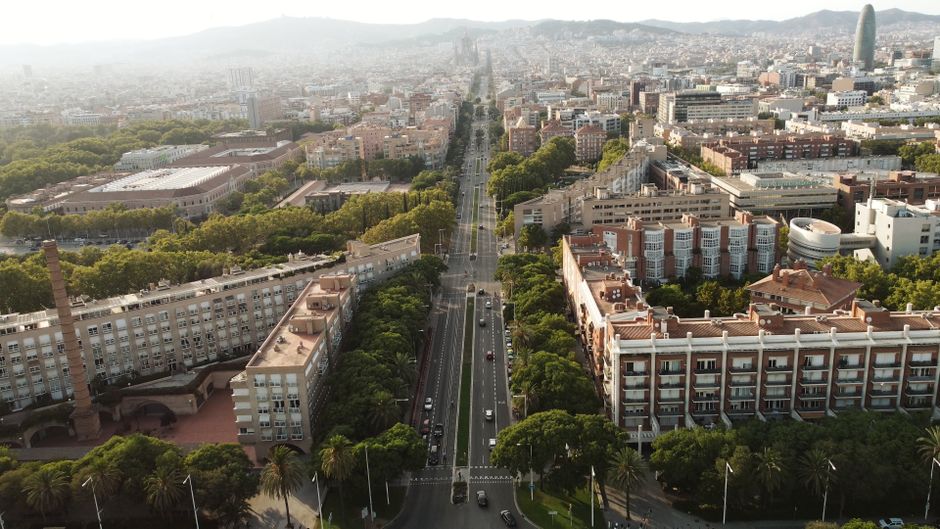
Barcelona's City Hall confirmed this spring that it will not renew any of the roughly 10,000 tourist apartment licences currently operating across the city when they expire in November 2028. That decision, announced by Mayor Jaume Collboni in 2023 and now moving steadily toward execution, did not arrive from nowhere. It is the product of fifteen years of incremental policy failure, resident pressure, and a housing market that has made the Eixample and Gràcia neighbourhoods nearly uninhabitable for working families on median wages.
Understanding where Barcelona stands today on the short-term rental question requires going back to 2008, when the city first introduced a licensing framework for tourist apartments under the Special Urban Plan for Tourist Accommodation — known locally by its Catalan acronym, PEUAT. The intention was managed coexistence. The result, as the platforms scaled and the money poured in, was something closer to displacement.
The first PEUAT, adopted in 2017 under then-mayor Ada Colau, created four zones across Barcelona with different rules governing where new licences could be granted. Zones 1 and 2 — covering the Gothic Quarter, the Born, Barceloneta, and most of the Eixample — were effectively frozen: no new licences, period. Zones 3 and 4 allowed limited growth in less-pressured neighbourhoods. It was the most aggressive municipal intervention on tourist apartments in any major European city at the time.
But the PEUAT had a structural flaw. Licences already issued before 2017 remained valid. Platforms including Airbnb continued to list thousands of properties operating on those legacy permits, and enforcement against unlicensed listings was sporadic. By 2023, the Sindicat de Llogateres, the Catalan tenants' union, was documenting cases of landlords in Poblenou and Sant Antoni converting entire stairwells into de facto hotels, one flat at a time, with minimal legal consequence.
Meanwhile, rental prices told their own story. According to data from the Catalan housing authority, the median monthly rent in Barcelona crossed €1,200 for a standard two-bedroom flat in 2023 — a figure that had roughly doubled over the previous decade. The concentration of tourist apartments in central districts, analysts have argued, removed tens of thousands of units from the long-term rental supply during precisely the years when demand from incoming workers in the city's tech and biomedical sectors was climbing sharply.
Collboni, who took office in June 2023 leading a minority government backed by the Socialists, moved faster on tourist apartments than many observers expected. His June 2023 announcement that all 10,101 licences would lapse in 2028 without renewal was partly a political calculation — housing had become the single dominant issue for voters under 40 in the city — and partly a legal opportunity. The licences, issued for fixed ten-year terms under the 2014 regulatory cycle, were genuinely expiring. City Hall was not revoking them; it was simply declining to reissue them.
Platform operators and some property owners have contested the move through administrative channels, and cases remain pending before Catalan administrative courts. The Hotel Sector Association, whose members stand to benefit from reduced apartment competition, has publicly backed the phase-out. Neighbourhood associations in Sagrada Família and Sant Pere have organised in support. The legal and political arguments continue in parallel.
What happens next depends substantially on whether Barcelona can convert the returning housing stock into affordable long-term rentals rather than watching landlords pivot to medium-term stays — the 30-to-90-day market that currently sits in a regulatory grey zone. City Hall's Housing Plan for 2024–2030 earmarks €170 million for subsidised rental schemes and the acquisition of properties to add to the public housing stock, though housing advocates have noted that figure represents a fraction of what would be needed to make a structural dent. Residents in the Raval and Hostafrancs watching the clock on 2028 would do well to follow the court calendar alongside it.
How does this story make you feel?
Spread the word
About this article
Published by The Daily Barcelona
Daily brief
Free, in your inbox before 7am. Weekdays.
More in News


