Barcelona's Digital Archive Push Runs Into a Wall of Duplicate Images This Week
City-linked institutions scramble to fix a sprawling duplicate-image problem threatening the quality of Barcelona's flagship online cultural records.
City-linked institutions scramble to fix a sprawling duplicate-image problem threatening the quality of Barcelona's flagship online cultural records.
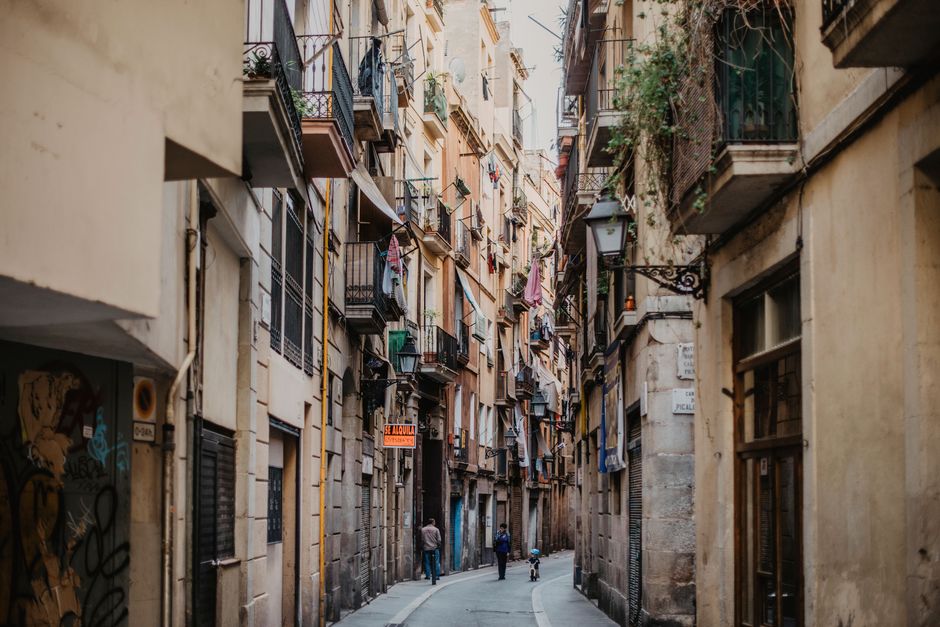
Barcelona's push to digitise its municipal cultural collections hit a concrete obstacle this week when archivists and digital managers at several city-linked institutions confirmed they are dealing with a significant backlog of duplicate images cluttering key public-facing databases — slowing searches, inflating storage costs and undermining the reliability of records that residents, researchers and tourists rely on daily.
The issue surfaced publicly at a working session held Tuesday at the Centre de Cultura Contemporània de Barcelona, the CCCB on Carrer de Montalegre in El Raval, where representatives from the Arxiu Municipal de Barcelona and the Institut de Cultura de Barcelona met to coordinate a joint response. The problem is not new, but its scale has grown sharply as digitisation accelerates: multiple scanned versions of the same photograph, document or artwork end up indexed under different file names, sometimes across different platforms, creating confusion for end users and wasting server resources.
The urgency is tied directly to the Collboni administration's ongoing digital-infrastructure commitments. Barcelona City Council allocated roughly €4.2 million in its 2025 municipal budget for cultural digitisation and open-data initiatives, with a significant tranche earmarked for expanding the Memòria de Barcelona portal — the city's central digital heritage repository. With that spending already underway, administrators cannot afford to keep building on top of a foundation riddled with redundant files.
The problem is also intertwined with the city's push against unregulated short-term rental operators. The Arxiu Municipal has been compiling photographic evidence of historic building facades across Eixample and Gràcia — documentation used by inspectors verifying whether property owners have altered protected structures to accommodate tourist apartments. Duplicate or mislabelled images in those records have, on at least two recent occasions, complicated enforcement proceedings, according to the session's working documents, which were shared publicly by the Institut de Cultura de Barcelona after the meeting.
Spain's national framework for digital public records, established under Royal Decree 4/2010 governing the National Interoperability Scheme, requires public bodies to maintain unique, traceable identifiers for each digitised asset. Failure to comply can create legal exposure when archived images are used as evidence in administrative disputes — precisely the scenario the Eixample inspection cases illustrated.
The response plan agreed at Tuesday's session involves three stages. First, the Arxiu Municipal will deploy automated deduplication software — a tool already piloted in 2024 on a subset of the Fons Fotogràfic Pérez de Rozas, a collection of roughly 40,000 press photographs dating back to the 1930s. That pilot identified and resolved around 3,200 duplicate entries, and the same approach will now be applied to the broader municipal image database, which holds more than 600,000 assets.
Second, the Institut de Cultura de Barcelona will introduce a mandatory metadata-verification step before any new batch of images is uploaded to the Memòria de Barcelona portal. Each file will require a unique SHA-256 hash — a standard digital fingerprint — generated at the point of scanning, preventing duplicates from entering the system in the first place.
Third, staff from the Biblioteca de Catalunya on Carrer de l'Hospital in El Raval have been invited to share their own deduplication protocols, developed over two years of managing the institution's Cartoteca Digital. The library's experience offers a practical reference point: their process reduced redundant map-image records by 18 percent between January and December 2025, according to the institution's annual digital report published in March 2026.
Completion of the first deduplication sweep is targeted for October 2026, ahead of a European Commission review of Spain's progress under the EU's 2021-2027 Digital Decade policy framework. Municipal archivists say the October deadline is tight but achievable if the software licensing agreements, currently in final negotiation with a Barcelona-based technology contractor, are signed before the end of July. Residents who notice mislabelled or duplicated images on the Memòria de Barcelona portal can flag them directly through the site's reporting tool — a feature that has logged more than 400 user-submitted corrections since it launched in September 2024.
How does this story make you feel?
Spread the word
About this article
Published by The Daily Barcelona
Daily brief
Free, in your inbox before 7am. Weekdays.
More in News


