Barcelona's Digital Archives Push Forward on Duplicate Image Crisis This Week
City institutions and cultural organisations are racing to clean up years of duplicate and misattributed images clogging their public databases.
City institutions and cultural organisations are racing to clean up years of duplicate and misattributed images clogging their public databases.
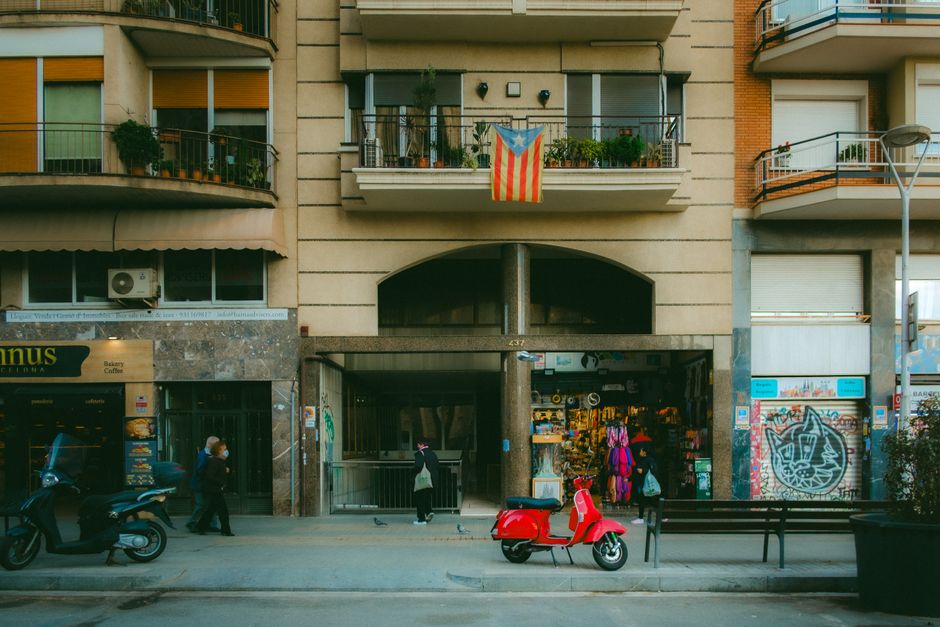
Barcelona's main municipal digital archive, the Arxiu Municipal de Barcelona, confirmed this week that an internal audit launched in late June had identified thousands of duplicate images across its publicly accessible photograph collections — a problem that has quietly compounded since the archive accelerated its digitisation drive in 2023. The cleanup effort, still ongoing as of Saturday, 4 July, affects collections spanning the Eixample neighbourhood's urban development records and the port reconstruction photographs from the 1980s.
The timing is not accidental. The city's broader push to digitise cultural patrimony — tied to the 2024-2027 Barcelona Digital Strategy, which allocated funds specifically to heritage cataloguing — has meant that material scanned at different points by different departments ended up entered multiple times under inconsistent metadata tags. A photograph of Passeig de Gràcia taken in 1965, for instance, might exist under three different filenames, two different date stamps, and contradictory attribution notes.
Duplicate images are not merely a storage headache. They distort search results for researchers, journalists, and urban planners relying on the archive to document neighbourhood change over time. When the Institut de Cultura de Barcelona runs public exhibitions — as it did last autumn at the Born Cultural and Memorial Centre — curatorial teams have to manually cross-check images before printing, a process that one recent internal review described as adding up to six additional working days per exhibition cycle. That review, cited in a municipal transparency report published in May 2026, found that roughly 12 percent of images ingested since 2021 had at least one duplicate in the system.
The problem extends beyond the Arxiu Municipal. The Col·legi d'Arquitectes de Catalunya, headquartered on Plaça Nova in the Gothic Quarter, manages its own photographic collection of Barcelona building permits and demolition records. Staff there have been coordinating with the municipal archive since March to align deduplication protocols, particularly for images covering the Poblenou industrial district, where urban transformation over the past two decades generated enormous overlapping photographic documentation from multiple agencies simultaneously.
The immediate trigger for this week's activity was the rollout of a new automated deduplication tool, developed under a contract with a Catalan technology firm based at the 22@ innovation district. The software uses perceptual hashing — a technique that identifies visually near-identical images even when file formats or resolutions differ — rather than simple filename matching. Early results shared internally on Tuesday showed the tool flagging approximately 34,000 candidate duplicates within the municipal photographic series covering 1950 to 1990, a period that includes critical documentation of the city's transformation under and after the Franco regime.
Archive staff are now working through those flagged files manually before any deletion takes place, a safeguard insisted on after an incident in 2024 when an automated process at a European city archive permanently removed images later found to be distinct. Barcelona's team is operating out of the Arxiu's main facility on Carrer de Santa Llúcia, near the Cathedral, with additional reviewers brought in on temporary contracts through July.
The broader relevance for ordinary Barcelonins is practical. The archive's publicly searchable portal — used by residents researching property histories, schools preparing local history materials, and developers navigating planning appeals — has periodically returned broken or mislabelled image results. Once the deduplication process is complete, the archive expects search accuracy to improve substantially, though officials have not committed to a specific public relaunch date.
For anyone needing archive access in the next few weeks, the Arxiu Municipal has advised scheduling in-person research visits rather than relying solely on the online portal, which may show intermittent gaps as records are reindexed. The Col·legi d'Arquitectes reading room on Plaça Nova remains fully operational and can assist with queries relating specifically to architectural and planning documentation. The next progress report on the deduplication project is expected before the end of July.
How does this story make you feel?
Spread the word
About this article
Published by The Daily Barcelona
Daily brief
Free, in your inbox before 7am. Weekdays.
More in News


