Barcelona's municipal government announced Thursday that 14 new "cooling corridors" — shaded walking routes combining misting stations, widened tree canopies and water features — will be operational before the end of July, part of a €4.2 million investment authorised under the city's Pla Clima 2030 framework. The corridors will link Las Ramblas to the Barceloneta waterfront and extend through the heat-stressed neighbourhoods of Gràcia and Sant Andreu, areas that recorded surface temperatures above 42°C during the June heat event that killed dozens across the western Mediterranean.
The timing is deliberate. France registered more than 2,000 excess deaths at the peak of last month's heatwave, and health authorities across Catalonia are acutely aware that Barcelona's dense, stone-built urban fabric traps heat in ways that coastal breezes alone cannot fix. The Agència de Salut Pública de Catalunya confirmed this week that emergency room visits linked to heat illness in the metropolitan area rose 31 percent during the last two weeks of June compared with the same period in 2025. Mayor Jaume Collboni, who has staked much of his second-term agenda on liveable-city credentials, signed the cooling corridor decree on Wednesday morning at the Parc de la Ciutadella pavilion.
Port Pressure and the Cruise Industry Ultimatum
Simultaneously, the Port de Barcelona received formal written notice from the city's environmental office that all cruise vessels docking at the port must connect to shore-side electrical supply — known as cold ironing — by March 2027, six months ahead of the previously stated deadline. The move puts Barcelona ahead of Valencia and Palma de Mallorca in Mediterranean port emissions policy. Currently, only two of the port's seven cruise terminals have functioning electrical hookup infrastructure; the Autoritat Portuària de Barcelona has committed €38 million to retrofitting the remaining five berths by December 2026.
The port controversy has simmered for years in neighbourhoods like El Raval and the Barceloneta, where residents have long complained about diesel particulates from idling cruise ships. Environmental group Aliança contra la Contaminació Portuària, based in the Poblenou district, welcomed the tightened deadline but said enforcement mechanisms remain vague. The group wants the city to impose daily fines of at least €15,000 for vessels that fail to connect to shore power once infrastructure is in place — a figure currently absent from the municipal notice.
Barcelona's air quality data underscores the stakes. Nitrogen dioxide levels along the Passeig de Colom, the boulevard skirting the port's northern edge, averaged 48 micrograms per cubic metre in 2025, nearly double the World Health Organisation's recommended annual limit of 10 micrograms. The city's own Pla de Qualitat de l'Aire 2021-2026 set a target of reaching 40 micrograms on that corridor by end of this year — a goal that looks unlikely without faster progress on port electrification.
Green Rooftops and the Eixample Push
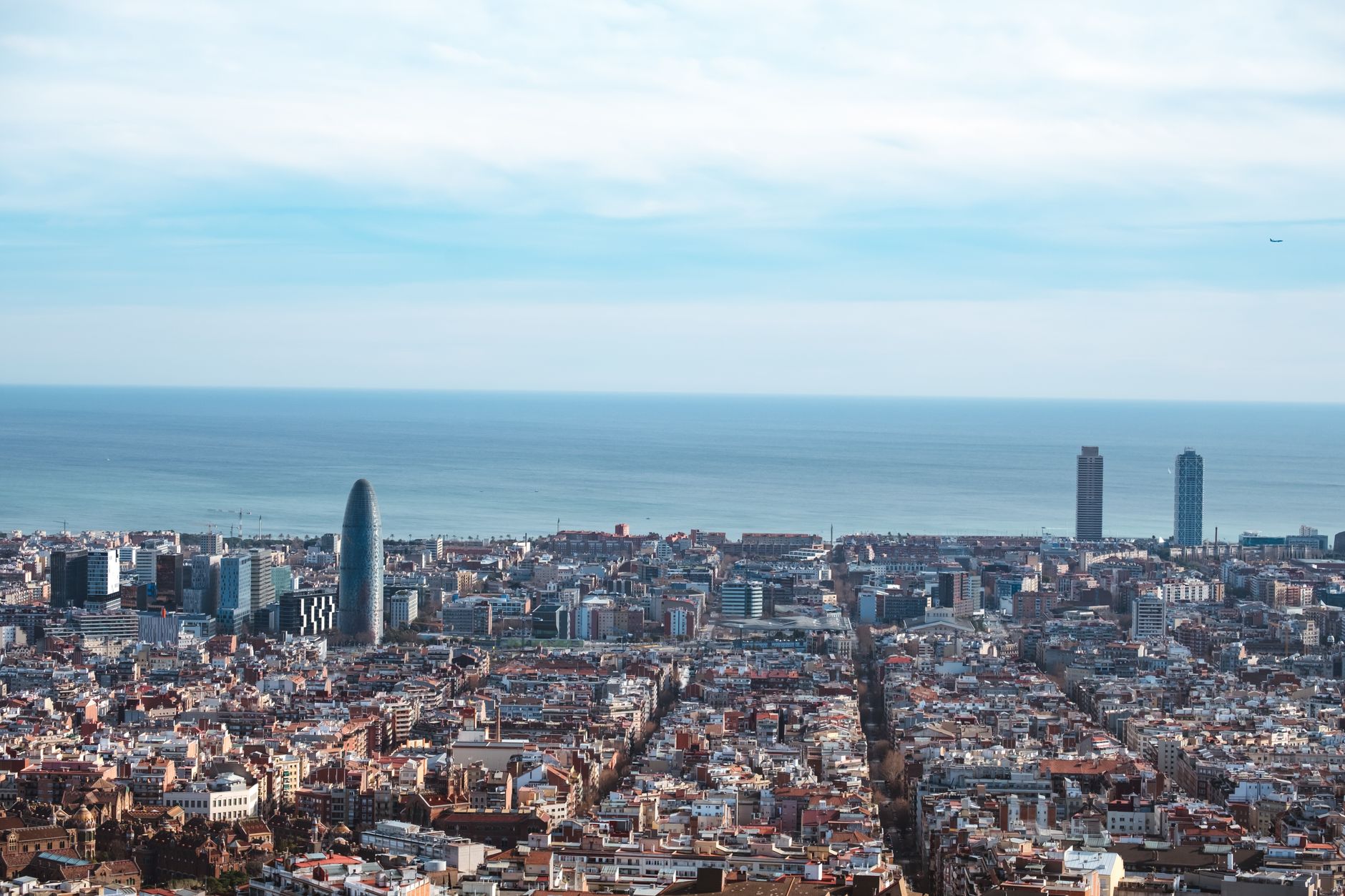
Elsewhere this week, the city's urban planning department published results from the first full year of its Cobertes Verdes programme, which subsidises the conversion of flat rooftops into green spaces in the Eixample district. Since July 2025, 63 buildings have applied for the subsidy, which covers up to 40 percent of installation costs capped at €12,000 per property. Eleven rooftop gardens are already complete, collectively adding roughly 2,400 square metres of vegetation to one of Europe's most densely built urban grids. The programme targets 200 rooftops by 2028.
Barcelona's Superilla — the superblock model pioneered in the Eixample around Carrer del Consell de Cent and now being rolled out in Sant Antoni — will receive three additional traffic-calmed intersections this autumn, the council confirmed Friday. Each reclaimed intersection adds approximately 800 square metres of public space previously occupied by parked cars.
Residents and building managers interested in the Cobertes Verdes subsidy can apply through the Agència d'Ecologia Urbana de Barcelona, with the next application window opening September 1. For the cooling corridors, the city's 010 information line will publish precise routes and misting station locations by July 14 — two weeks before the infrastructure is scheduled to open.