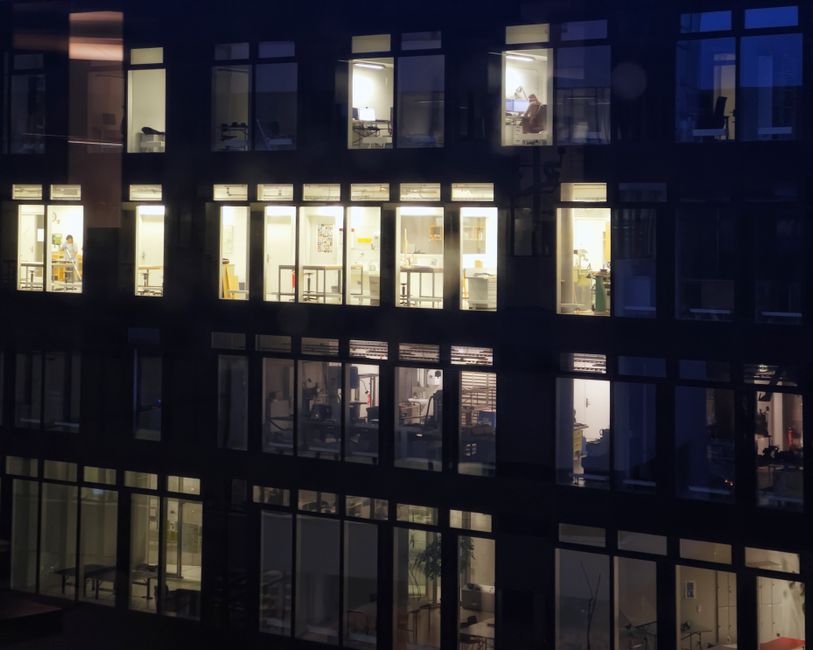
Barcelona's office vacancy rate climbed to 11.4 percent in the second quarter of 2026, according to figures compiled by Cushman & Wakefield's Iberian division — the highest level since 2021 — as international firms reassess their European footprints amid a cascade of geopolitical shocks that show no sign of stabilising.
The timing matters. Corporate real-estate decisions that would normally follow a predictable 12-to-18-month cycle are now being compressed or deferred entirely. Companies with exposure to Middle Eastern markets are watching the succession crisis in Tehran with particular attention; the death of Ayatollah Khamenei has injected fresh uncertainty into trade relationships that some multinationals had quietly rebuilt over the past two years. Meanwhile, the Trump administration's aggressive travel restrictions have rerouted business travel patterns across the Atlantic, with several North American firms reconsidering whether Barcelona or Madrid should serve as their primary southern European hub.
What This Means on the Ground in Barcelona
The pressure is most visible in the 22@ innovation district in Poblenou, where a cluster of tech and professional-services firms had locked in expansion plans through late 2025. At least three mid-sized tenants on Carrer de Pallars have quietly returned floor space to the market in the past six months, according to two commercial agents who work the district regularly. One block away on Avinguda Diagonal, the flagship Barcelona office of a northern European logistics company has been on the sublease market since March.
At the premium end, the situation is more nuanced. The Torre Glòries tower and the new towers along Passeig de la Zona Franca are still attracting serious inquiries from firms looking to consolidate scattered offices into a single, high-quality address. Prime rents in those Grade A buildings have held at roughly €26 per square metre per month — flat compared to a year ago but not falling, which agents describe as a minor victory given the wider context.
Sociedad de Tasación, the Spanish property valuation firm, published its mid-year commercial outlook on June 30 noting that Barcelona's office market absorbed just 68,000 square metres in the first half of 2026, down 22 percent from the same period in 2025. The firm attributed the slowdown partly to corporate caution driven by geopolitical uncertainty and partly to the continued hybrid-work hangover, which is proving more durable in Barcelona than in Paris or Frankfurt.
Where Businesses Go From Here
The flex-office sector is picking up the slack. Spaces like WeWork's Plaça de Catalunya location and the Regus cluster in the Eixample have reported occupancy rates above 85 percent through June, as companies opt for rolling six-month contracts rather than committing to conventional five-year leases. The Barcelona Chamber of Commerce flagged this trend in its June bulletin, describing it as both an opportunity and a structural risk for the city's long-term commercial property tax base.
For businesses currently hunting for space, the data suggests the next three to six months offer genuine negotiating leverage in secondary locations — particularly in Sant Martí and the northern stretch of the Eixample, where incentive packages including rent-free periods of up to four months are being offered on deals above 500 square metres. Prime addresses near the Diagonal or the waterfront are a different conversation entirely, where landlords are holding firm.
The broader lesson from this quarter is that Barcelona's commercial property market no longer moves on purely local rhythms. A funeral in Tehran, a policy announcement from Washington, or a political transition in Lima can shift corporate planning cycles within weeks, and the firms that navigate 2026 most successfully will be the ones that have already stress-tested their real-estate commitments against a world that keeps producing surprises.